Adding Color to Cyanotype: How I'm Experimenting with Toned and Multi-Layered Prints
Cyanotype is one of the oldest photographic processes around, and it has a reputation for being beautifully simple - deep Prussian blue on white, stark and striking. But what happens when you start pushing past that? For me, the question of what else is possible has turned into one of the most creatively rewarding rabbit holes of my art practice.
Where This Obsession Started
I've been working with cyanotype as one of my main mediums for a while now, but this year something shifted. I became genuinely obsessed with figuring out how to bring color and layers into a process that most people associate with a single, monochrome tone.
It started with experimenting - photograms made with objects and figures, then combining those photograms with printed digital negatives. Each experiment opened up a new question, and those questions kept pulling me forward.
The work that came out of this year of experimenting has been some of the most technically involved and personally meaningful work I've made.
What Makes Multi-Layered Cyanotype More Complex
Printing a single digital negative onto cyanotype paper is one thing. Printing multiple layers is a different process entirely, and it requires more planning and precision at every step.
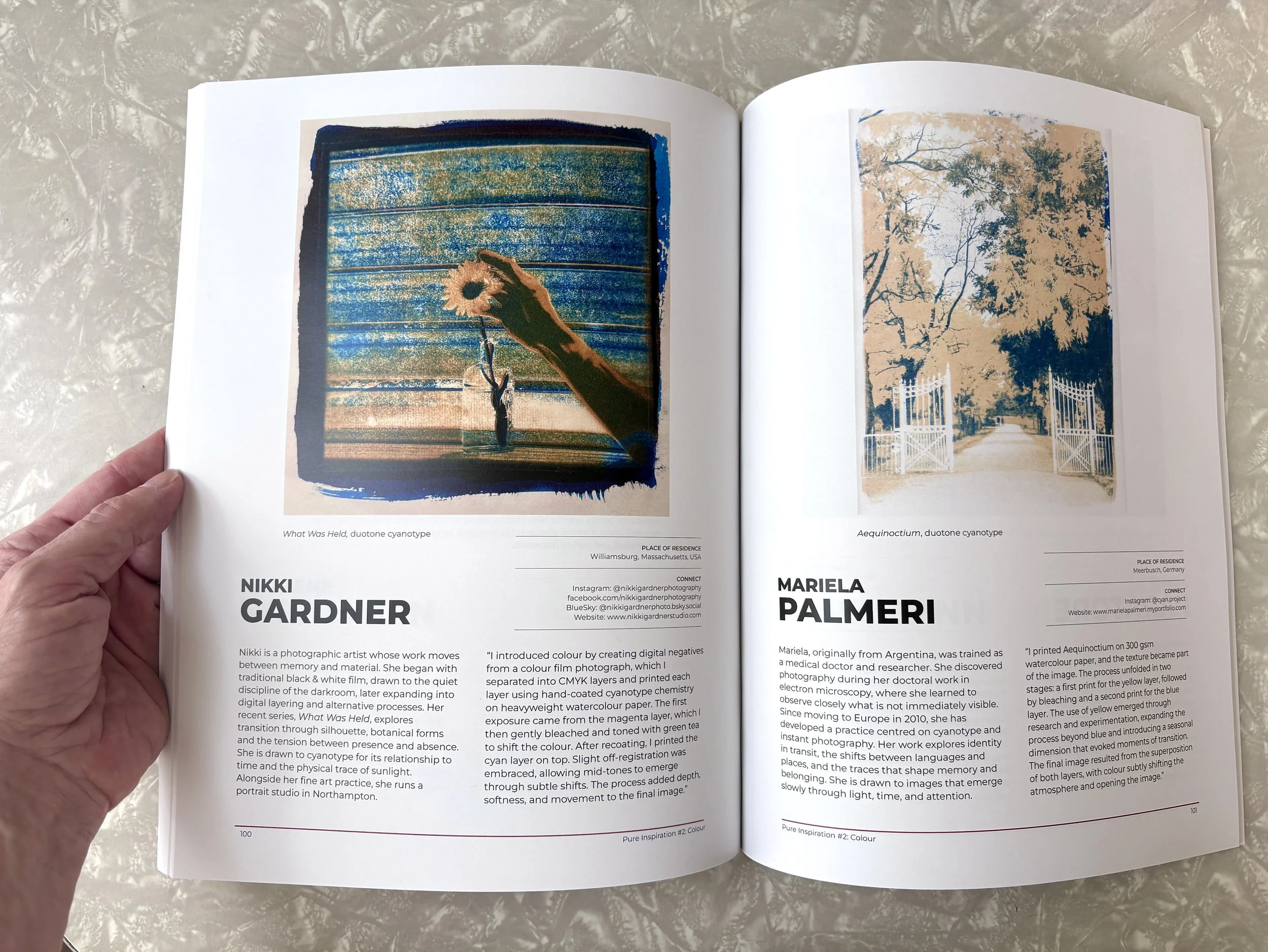
For the print I've been working on this year, I started with a film negative, then processed it into a multi-layered digital negative so I could print more than one layer onto the same surface. Here's what that involves:
Starting with a film negative as the original source material
Converting and processing that negative digitally to create multiple separate layers
Printing each layer individually, with careful registration so they align correctly
Working through the cyanotype chemistry for each pass
It takes more time and more technical attention than a single-layer print, but the results - color, depth, dimension - are what make it worth it.
Getting Published in Pure Inspiration, Volume 2
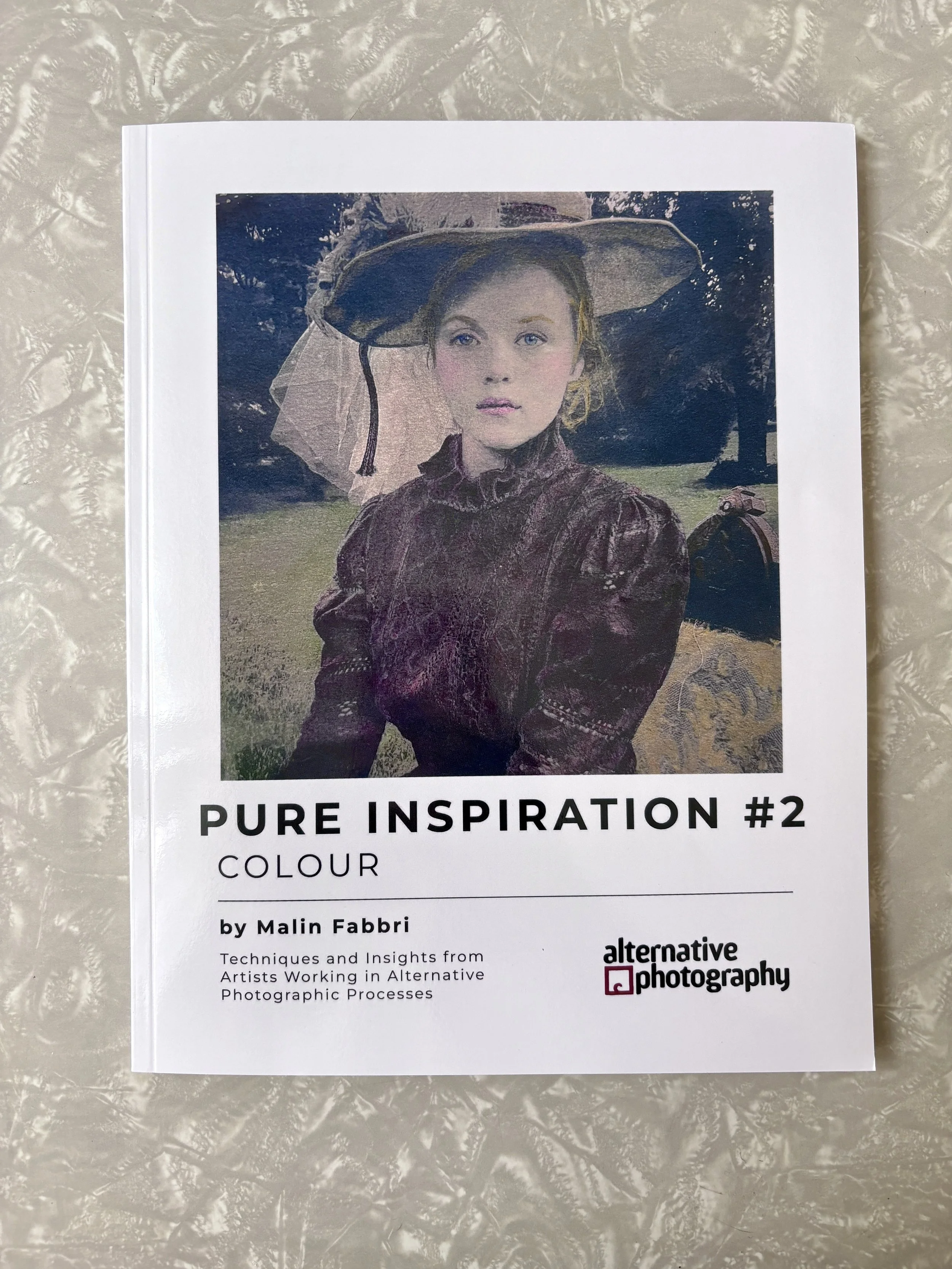
One of the highlights of this year was having one of my two-toned cyanotype prints selected for publication in Pure Inspiration, Volume 2 - Colour, a book put together by alternativephotography.com.
The book features over 140 artists who are all exploring how to bring color into a process that is traditionally monochrome. Being included alongside that many artists who are working through the same questions I am felt meaningful. It's the kind of recognition that also pushes me to keep experimenting.
If you're curious about alternative photography and the range of what artists are doing with color in this space, the book is worth looking at.
Experimenting with Natural Toners
The toning side of this work is where things get especially interesting to me right now. I'm still in active experimentation mode with different natural toners for duo and tri-toned cyanotypes, and my current roster of materials includes:
Avocado skins and pits
Sweet potato skins
Other kitchen scraps and herbs
Natural toners shift the color of the processed cyanotype print through a chemical reaction with the iron compounds in the image. Different tannins and plant compounds create different color shifts, which is part of what makes this so compelling - and unpredictable in the best way.
Every batch of toner behaves a little differently depending on concentration, temperature, and how long the print is left in the bath. There's a lot of observation and note-taking involved.
Why This Kind of Work Matters to Me
Alternative photography processes like cyanotype ask you to slow down and stay present. There is no undo button when you're working with chemistry, paper, and light. Each print is its own object, shaped by every decision made along the way.
Adding color and layers to that process deepens what the work can hold. It brings warmth, complexity, and a sense of time into images that might otherwise read as purely graphic or historical.
For me, this is where photography and art-making fully overlap. The technical rigor and the intuitive experimentation feed each other, and the results keep surprising me.

See the Work in the Shop
If you've been following along with this process and want to bring one of these prints into your home, I'm planning to add new toned cyanotype prints to my online shop as this current round of experiments develops.
These are original, handmade prints - each one a direct result of the process I've been describing here. Keep an eye on the shop at nikkigardnerstudio.com for new additions.
And if you're a fellow alternative process photographer curious about any part of what I've shared here, feel free to reach out. This work is more interesting when there are people to talk about it with.
